
Featured Posts

Trump Hails “Historic Dawn” as World Leaders Sign Gaza Ceasefire Deal in Egypt
The ceasefire’s early phases are necessary but not likely not sufficient. For this deal to mean change, it must unfold into meaningful governance frameworks, disarmament, infrastructure reconstruction, and political integration.

Ceasefire in Gaza Takes Effect — But Questions Remain
The new ceasefire offers real opportunity—but it is not a breakthrough yet. On one side, it brings critical relief: hostages may be freed, aid may flow, and civilian suffering could ease. On the other, its success hinges on cooperation, trust, and enforcement in a deeply hostile environment.

Trump Sends National Guard to Chicago and Portland, Prompting Legal and Political Firestorm
The deployment into U.S. cities is among the riskiest moves a president can make. On one hand, the federal government rightly has a duty to protect its property and personnel. If local authorities are truly unable or unwilling to maintain order at federal sites, some intervention may be defensible. On the other hand, casting cities as battlegrounds raises deep constitutional, practical, and normative alarms.

Government Faces Midnight Deadline as Shutdown Looms
There is legitimacy to the argument that continued deficits and unfettered spending are unsustainable. Negotiation over priorities—the scope of federal programs, health care, welfare, defense—is a core responsibility of Congress. But forcing a shutdown as a negotiating tactic comes with real costs, both to citizens and to institutions.

Trump Says U.S. Cities Should Be Military ‘Training Grounds’ during Speech to Generals
The Right views these message as a return to toughness, while the Left sees it as an authoritarian power grab. A more balanced view acknowledges legitimate concerns about readiness and discipline in the armed forces, but it also raises serious questions about the domestic role of the military.
Archive
Trump Hails “Historic Dawn” as World Leaders Sign Gaza Ceasefire Deal in Egypt
The ceasefire’s early phases are necessary but not likely not sufficient. For this deal to mean change, it must unfold into meaningful governance frameworks, disarmament, infrastructure reconstruction, and political integration.
Ceasefire in Gaza Takes Effect — But Questions Remain
The new ceasefire offers real opportunity—but it is not a breakthrough yet. On one side, it brings critical relief: hostages may be freed, aid may flow, and civilian suffering could ease. On the other, its success hinges on cooperation, trust, and enforcement in a deeply hostile environment.
Trump Sends National Guard to Chicago and Portland, Prompting Legal and Political Firestorm
The deployment into U.S. cities is among the riskiest moves a president can make. On one hand, the federal government rightly has a duty to protect its property and personnel. If local authorities are truly unable or unwilling to maintain order at federal sites, some intervention may be defensible. On the other hand, casting cities as battlegrounds raises deep constitutional, practical, and normative alarms.

Government Faces Midnight Deadline as Shutdown Looms
There is legitimacy to the argument that continued deficits and unfettered spending are unsustainable. Negotiation over priorities—the scope of federal programs, health care, welfare, defense—is a core responsibility of Congress. But forcing a shutdown as a negotiating tactic comes with real costs, both to citizens and to institutions.
Trump Says U.S. Cities Should Be Military ‘Training Grounds’ during Speech to Generals
The Right views these message as a return to toughness, while the Left sees it as an authoritarian power grab. A more balanced view acknowledges legitimate concerns about readiness and discipline in the armed forces, but it also raises serious questions about the domestic role of the military.

CBS Cancels Late Show with Stephen Colbert: Corporate Strategy or Silencing Dissent?
Colbert’s departure removes one of the most prominent and unabashedly political voices in late-night television. Whether or not the cancellation was motivated by politics, it may be interpreted by viewers and critics alike as part of a larger recalibration of how network TV balances entertainment, commentary, and influence.
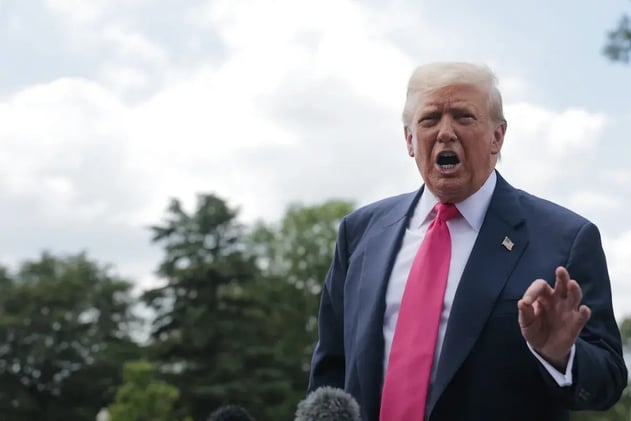
Trump Turns on Supporters Over Epstein Files as Both Sides Demand Transparency
Across the political spectrum, there's rare agreement: the American public deserves clarity. While Trump portrays the Epstein file movement as a “scam,” both Democrats and many Republicans reject that framing and support the release of credible, non-sensitive information.

Trump Gives Russia a Peace Deadline, Weapons to Ukraine
Both sides want to support Ukraine and pressure Putin—but disagree sharply on tools: military escalation paired with economic pressure, or aid plus diplomacy and restraint. The debate underscores a central question of U.S. foreign policy: how to protect without provoking.

Iran-Israel Conflict Escalates as Airstrikes, Missile Barrages Rock Region
The conflict between Iran and Israel dramatically escalated over the past week, drawing global attention and raising fears of a much broader war. On June 13, Israel launched a series of major airstrikes, dubbed Operation Rising Lion, targeting Iranian nuclear facilities, missile sites, and military leaders. Reports estimate over 220 people have been killed, with thousands injured.

Trump’s Visit to Qatar Sparks Deals and Deep Debate
President Donald Trump traveled to Doha today for a high-profile visit with Emir Sheikh Tamim bin Hamad Al Thani, marking a significant moment in U.S.-Qatar relations. The visit included ceremonial fanfare, a Cybertruck-led motorcade, and an eight-jet military escort for Air Force One upon arrival.

Trump's First 100 Days: Aggressive Action, Deepening Divide
On nearly every major issue — trade, education, immigration, civil rights — Trump’s presidency has further polarized the nation. Both sides agree the stakes are high; they fiercely disagree on whether the country is being saved or sabotaged.